Sunday, 11 February 2018

Sir Ganga Ram 's Statue inside Sir Ganga Ram Hospital Delhi, India

'A Tribute To A Son Of Punjab'


These are Photographs Of English Commemorative Stone And Statue Of Honorable Sir Ganga Ram, The Great Son Of Punjab Erected Inside Sir Ganga Ram Hospital Delhi, India. He Was a great Philanthropist of His Times . His Work For healing the Sorrows of Humanity is Never Forgettable.

English Commemorative Stone Erected at the Base of the Statue Reads As Below :


'Sir Ganga Ram

(1851-1927)

Born in Mangatwala, Lahore, Sir Ganga Ram, A Brilliant Civil Engineer, Constructed Many Monumental Buildings in Lahore, While Serving the British Government. Last Two Decades of his life, he devoted for Agricultural and Philanthropic activities. He converted 50000 Acres of Barren landing on fertile land by designing an innovative lift irrigation system, Constructing Hydel Power Station and providing unique horse train to this land known after Him as "Gangapur". In 1921, He Set up Sir Ganga Ram Hospital at Lahore. For this unique Philanthropic and innovative engineering achievements, Queen of England Knighted him in 1922.'


Photographs By Mr. Ravinder Singh Saini Ji

Friday, 9 February 2018

Gymkhana Club Lahore, Punjab, Pakistan

These are some Photographs of English Commemorative Matel Plate And British Times Beautiful Building Of Gymkhana Club Lahore, Punjab, Pakistan.

English Commemorative Matel Plate Of Gymkhana Club Lahore Describes as Below :


'In Rememberanc SIR GEORGE EDWARD. B. ABELL ISLAND, KCIE, OBE

Teams: Oxford University (Triple Blue) Worcesterskire,  Northern India.

Second The First Double Century of the Tournament, 210 In Ranji Trophy As Captain of Northern India 1934-35 Gymkhana Ground Lahore. First English Wicket Keeper Batsman To Make a Century. Private Secretary to Lord Wavell & Lord Mountbatten Viceroys of India.

Born : June 22,1904

Died: Jan 11, 1989.'


Photographs Source: Prof. Shuaib Raza Ji,  Lahore Explorer


Queen Noor Jahan 's Tomb Located in Shahdara Lahore, Punjab, Pakistan

These are some Photographs of English and Urdu Commemorative Board, Persian Headstone and Great Mughal Times Tomb of Queen  Meher-Un-Nisa Titled Noor Jahan, The Empress of India And The Queen of Emperor Jahangir Located In Shahdara Lahore, Punjab, Pakistan.

English Commemorative Board Describes As Below :


'Noor Jahan's Tomb

Meher-Un-Nisa Titled Noor Jahan (Light Of The World) was the daughter of Mirza Ghias Baig a Noble from Iran. She was beloved Queen of Emperor Jahangir (1569-1627 AD.). Having Survived Jahangir By 18 Years, She died in 1645 AD at the age of 72 years. The Mausoleum Most Probably built in her lifetime, repose the Mortal remain of this Lady who for years ruled the ruler  of Mughal India. She was only the Empress of Mughal Dynasty whose name appeared on the coinage of that period. The tomb took four years in completion at a cost of Rupees 0.3 Million. Standing on a platform 158' Square the tomb measures 134' Square and 19' × 4" high. The vaulted rooms were all covered with morble wrought with flowers of Mosaic which were removed during the Sikh Rule in Lahore. The minute painting executed in intricate pattern in the honey combed cornice of some of the rooms, are Of special interest. The inner floor was covered with morble and outer platform was covered with Sang-i-Abri. The exterior of the tomb was worked by red sandstone inlaid with floral Motifs in white, black and yellow marble. The central vaulted chamber of the tomb contains a morble platform with two cenotaphs, one of Noor Jahan and the other one said is to be her daughter Ladli Begum. The present floor of the main chamber was built by Hakim Ajmal Khan of Delhi in 1912. The original morble sarcophagus was of great workmanship and with the attributed names of Allah in same style and as there of Jahangir and Asif Khan. During the reign if Ranjit Singh the whole tomb was stripped of its costly ornamental stones a ordered to open the subterranean room while contains the graves of the Queen her daughter were two coffins buried underground a great insult to Empress of India. '


Photographs By Ali Babar


Saturday, 3 February 2018

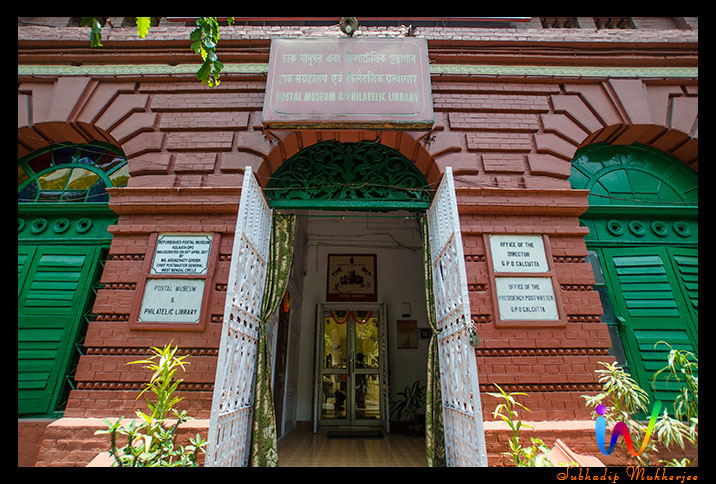
Postal Museum and Philatelic Library Kolkata, West Bangal, India

All These Photographs are Of English Commemorative Stones, Interior and Exterior Of British Times Beautiful Building Of Po


stal Museum and Philatelic Library Located in the City Of Calcutta (Kolkata), West Bengal, India. The Museum Consists of Four Rooms and There Placed Postcards from Three Different Era (East India Company, British India and Free India), Belts and Badges from the Various Departments, War Medals Earned By the Postal Department, Signature of Rabindranath Tagore in His Postal Savings Pass Book, An Early Map of Calcutta, Enamel Prints Depicting the Benefits of Quinine, Postal Endowment Assurance with the Signature of C V Raman, Old Postal Mail Collection Box, brass plates, sea signaling lanterns, weighing scale with standardized, maps of old air mail routes, maps of postal service availability during British India, Belts worn by the various staffs of the postal departments with their designation embossed on brass buckle and large vintage post collection boxes.

White Commemorative Stone Reads As:

'This Building was Erected for the Accommodation of the offices of Director General of Post Office of India. And was begun in 1884 and completed in 1885.
His Excellency The Earl of Dufferin K.P.G.C.B.,G.C.M.G. SC Being Viceroy and Governor General of India and The Honorable Sir Augustus Rivers Thompson K.C.S.T.,C.I.E., Lieutenant Governor of Bengal.

Government Architect Mr. E. Just. Mortin
Supts. Of works Major A. C. Bigg Wither, Major G.F.ES Neill, Executive Engineer Mr. H. Cloete.
Sub-Divisional Officer Sub-Conductor Mr. J. Mc. Minn.
Colonel S. T. Trevor R. E Chief Engineer and Secretary to Government of Bengal Public Works Department. '

Black Coloured Commemorative Stone Was Erected in the Pathetic Memory of the incident of Black Hole Of Calcutta 1756 And Shouts as Below :

' The Marble Pavement Below this Spot was placed here by Lord Curzon Viceroy And Governor General of India in 1901 To mark the Site of the Prison in old Fort William Known as The Black Hole in which 146 British Inhabitants of Calcutta were Confined on the night of the 20th June 1756 and from which only 23 came out alive.

The Pavement marks the Exact Breadth of the Prison 14 feet 10 Inches but not its fully length 18 Feet.

About one third of the area at the North End being covered by the Building on which This Tablet is Fixed. '


Photographs By Mr Subhadip Mukherjee Sahib