Monday, 31 August 2020

Tomb of Rooplo Kolhi at Parkar, Sindh ,Pakistan

 Revolutionary Special


بلھے شاہ اساں مرنا ناہیں، گور پیا کوئی ہور

(مرشد بلھے شاہ)


Bulhay Shah Asan Marna Naahi, Gor Pia Koi Hor (Murshid Bulhay Shah)


These are photographs Sindhi Headstone and grave of Great Sindhi Revolutionary Rooplo Kolhi located at Nagarparkar, Sindh, Pakistan. Rooplo Kolhi was a great revolutionary son of the soil of Sindh. Rooplo Kolhi was born in a village Konbhari near Nagarparkar. The name of his father was Shamtoo and mother was Kaisar Bai. When the British started to govern Thar and imposed tax, the castes of Kolhi and Shodho showed their extreme resistance against the foreign rulers. The gorilla soldiers of  Parkar under the leadership of Rooplo Kolhi fought gorilla war against the British from 1843 to 1859. Army offices and centers were brunt and British Treasures were looted. Rooplo Kolhi became a symbol of fear for the Britishers.


Some traitors informed the British Authorities about the presence of Rooplo Kolhi and Rooplo was arrested near Sharr Dhari when he was fetching water from a well. The British wanted Rooplo to accept his defeat, told the names of his companions and got his freedom from police arrest. The British Authorities presented his wife Menawati Kolhi before him and ordered her to make him agree with the will of British authorities and take him back to home safely. But Menawati Kolhi told her husband to accept death but never become traitor of the motherland of Sindh. I would like to lead my life after becoming widow of a martyr but I can't live after being a wife of a traitor. Due to her historical words, the name of Menawati Kolhi is written with golden words in the history of Sindh. Rooplo Kolhi was hanged till death with a babool tree at Gorr Dhroo canal Bank on 22nd August 1859 at 8 P. M.


Rooplo Kolhi has become a symbol of resistance and revolution in Sindh. Sindhi Nationalists adopt their second name as Rooplo as of Rooplo Cholyani. Due to his revolutionary ideas, it has become a proverb in Sindh:


"باغی ہو تو روپلو جیسا"


Famous intellectual of Sindh Ali Baba has written a drama named "Karanjhar Ka Qaidi". Along with this, his name is a part of Sindhi literature from poetry to prose. Chandio Anwar Aziz named him as Bhagat Singh of Sindh. Government of Sindh has dedicated a resort to Rooplo Kolhi near Karanjhar. 


It is Urdu translation of Sindhi Headstone of the grave of Great son of Sindh Rooplo Kolhi:


"ہے مرنا ہر ایک آدمی کو، مگر ایسے نہیں مرنا ساتھیو

کوئی شمع جلا کے جانا ہے، کوئی آگ لگا کے جانا ہے (شیخ ایاز)


یادگار

شہید روپلو کولہی

انگریزوں کے جلاف جنگ آزادی کا ہیرو

شہادت کی تاریخ 22 اگست 1859ع


منجانب: جیئے سندھ محاذ (چیئرمین عبدالخالق جونیجو)"


Photographs Gifted by Chandio Anwar Aziz Sahib


Sources:


1- Headstone of the Grave of Rooplo Kolhi


2- Article "Sindh Ka Bhagat Singh, Amar Shaheed Rooplo Kolhi" by Chandio Anwar Aziz Sahib 


Wednesday, 29 July 2020

# St. Jhon Fountain Lahore Cantt


These are photographs of English commemoratives stone and British times beautiful St. Jhon Fountain located inside Gol Garden Lahore Cantt, Punjab, Pakistan. St. Jhon Fountain was presented by R. S. Onkar Pershad in 1926 A. D. It is well preserved and still in good condition.


Courtesy by Prof. Veer Shuaib Raza Ji


Sources:

1- English commemoratives stone

Tuesday, 28 July 2020

L. C. B. Public Library Lahore Cantt


These are photographs of English commemoratives stone and new building of Lahore Cantonment Board Public Library located inside Gol Garden Lahore Cantt, Punjab, Pakistan. According to old commemorative stone, this library was originally built as Dinshaw Challa Reading Rom & Library in the year 1929 A. D.


Courtesy by Prof. Veer Shuaib Raza Ji


Sources:


1- Commemorative stone

Sunday, 5 July 2020

Memorial of Affiliation of Balochi Tribes of Dera Ghazi Khan with Punjab at Fort Munro Hill Station

Memorial of Affiliation of Balochi Tribes of Dera Ghazi Khan Area with Punjab at Fort Munro


This is the photograph of Memorial Column containing a commemorative stone in Urdu at Fort Munro Hill Station, Punjab, Pakistan. This memorial column was constructed in memory of the memorable event of Affiliation of Balochi Tribes of Dera Ghazi Khan area with the province of the Punjab in 1950 A. D. Bashir Ahmad Qureshi was Deputy Commissioner and Zulafqar Ali was Political Agent of Dera Ghazi Khan at that time. Along with this, this memorial column also describes the height of Fort Munro from sea level i, e 4670 feet. Commemorative stone holds this information in Urdu:


"786

پاکستان زندہ باد

1950

الحاق بلوچی قبائل علاقہ ڈیرہ غازی خان بہ پنجاب

بشیر احمد قریشی ڈپٹی کمشنر

ذوالفقار علی پولیٹیکل اسسٹنٹ

انچائی 6470 فٹ"


Courtesy by Prof. Veer Shuaib Raza Ji


Sources:


1- Commemorative stone

Tuesday, 30 June 2020

First Sitting Place of Baba Farid At Pak Pattan Sharif, Punjab, Pakistan


کاگا  کرگ  ڈھنڈولیا ٬  سگلا  کھایا  ماس
ایہ دو نیناں مت چھٌوہیو٬پی ویکھن کی آس

بابا فرید

These are photographs Urdu commemorative stone and memorial of first sitting place Hazrat Baba Farid Udin Masood Ganj Shakar located in the city of Pak Pattan Sharif, Punjab, Pakistan. This memorial building was constructed in memory of first sitting of Baba Farid Udin Masood Ganj Shakar by Hazrat Al-Haj Diwan Bakhtiar Syed Muhammad Sahib on 20th December 1993. Urdu commemorative stone describes the following historical information about this memorial:

" بِسْمِ اللهِ الرَّحْمٰنِ الرَّحِيْمِ
یااللہ    یامحمد

اللہ محمد چار یار   حاجی خواجہ قطب فرید

اولین نشت گاہ بابا صاحب
شیخ الشیوخ العالم زہد الانبیا حضرت بابا فرید الدین مسعود گنج شکر
خلیفہ اعظم قطب الاقطاب حضرت خواجہ قطب الدین بختیار کاکی اوشی

الہی تابود خورشید ماہی
چراغ چشتیاں دارد شنائی

تعمیر یادگار زیر نگرانی:  حضرت الحاج دیوان بختیار سید محمد صاحب رامت برکاتہ بروز پیر 6 رجب 20-12-1993 "

Courtesy by Miss Purva Masood Sahiba


Sources:

1- Commemorative stone


Wednesday, 24 June 2020

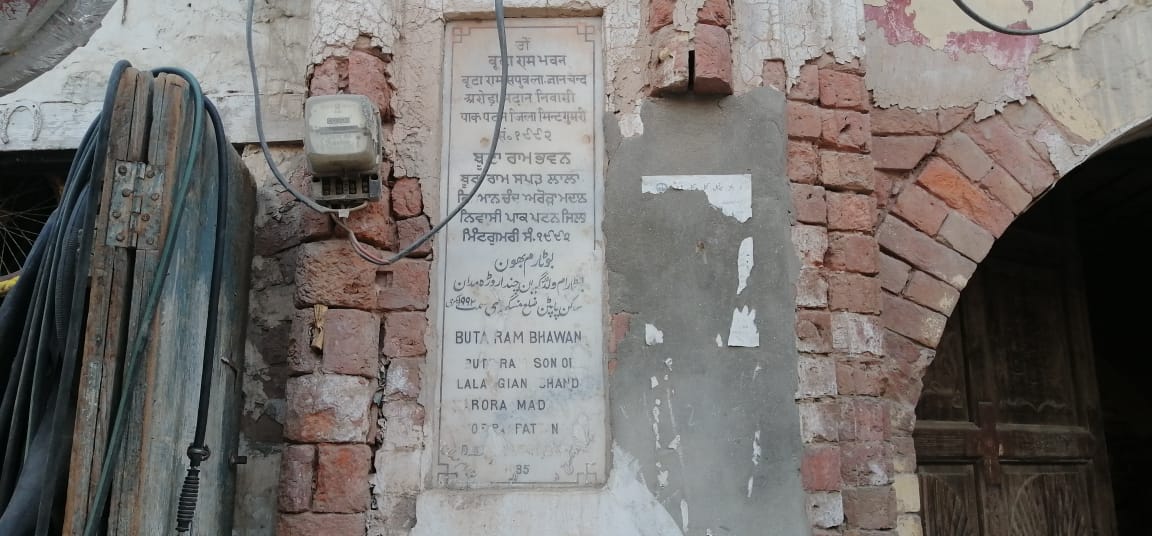
Buta Ram Bhawan Pak Pattan, Punjab, Pakistan

These are photographs commemorative stone and Pre-partitiion double storey building of Buta Ram Bhawan located at Pak Pattan city, Punjab, Pakistan. Same information is written on commemorative stone in four different languages i, e Hindi, Gurmukhi, Urdu and English. Commemorative stone carries this information:

"Buta Ram Bhawan
Buta Ram son of Lala Gian Chand Arora Madan of Pak Pattan District Mintgomery Simat 1992 Bikrami."


Courtesy by Miss Purva Masood Sahiba


Sources:

1-Commemorative stone


Friday, 19 June 2020

Gurudwara Nanak Dev Ji Chak #317/EB Burewala, Punjab, Pakistan


These are photographs Urdu and Gurmukhi commemorative stones and Pre-partitiion building of historic Gurudwara Nanak Dev Ji Located at Chak # 317 /EB Burewala, Punjab, Pakistan. The Inauguration of renovation and restoration work of Guruduwara Nanak Dev Ji was opened by Lt. General (R) Zulafqar Ali Khan Halal e Imtiaz, Chairman Evaque Trust Property Board Government of Pakistan with his hands on 9th January 2007. The old Gurmukhi commemorative stones erected with the building of Gurdwara Nanak Dev Ji Chak # 317/EB Burewala provides this historical information:

1-"Shri Akal Ji Sahaye Shri Maan Sardar Chula Singh Nagpal De Ghrojindo Bahi Narang nay sewa kiti 101 rupay Visakh 3 Simat 1983 vich Swargvas hoi Vasi Saldera di."


2- "Tehal Karai Sardar Sher Singh Bhasin Bude wala (Chak 333)"


3- "101 Sewa Karai Chani Ram Saputar La. Usnaki Ram Narang Saldera valay nay Visakhi 1 Samat 1984."


Courtesy by Mr. Malik Shafiq Anjum Ji


Sources:

1- Urdu commemorative stone

2- Gurmukhi commemorative stones


Tuesday, 16 June 2020

Patthar Masjid Srinagar, Kashmir, India


These are photographs of English commemorative metal plate and 397 years old Patthar Masjid located near Zaona Kadal Srinagar, Kashmir, India. English commemorative metal plate erected by Superintending Archeologist Archeological Survey of India Srinagar Circle provides this historical information about Patthar Masjid Srinagar:


"Patthar Masjid, Srinagar

Patthar Masjid (the stone mosque) (Latitude 34'05'28" N, Longitude 74°48'22" E) was built by Empress Nurjahan in A. H. 1033 (A. D. 1623). The mosque is rectangular in plan having nine bays and sloping roof which is supported by outer walls and columns inside made of local Grey stone. Its facade consists of nine arches including a large arched portico in the centre. The arched openings enclosed in shallow decorative recessed arches are set within rectangular frames. The plinth is Surmounted by lotus leaf coping and decoration in the form of Guldastas, stars and panelling can also be seen at places. The portion between projecting cornices and eaves is curved with series of lotus leaves in relief. Flight of steps on either side of central front arch provides access to enter-floor and roof. The lower portion of the massive columns inside is of stone while the upper portion is of bricks plastered with lime mortar.

The compound wall is of brick monsory having shallow arched niches. Each stone carries a Mason's mark.

Superintending Archeologist Archeological Survey of India Srinagar Circle, Srinagar (2017)."


Courtesy by Mr Qamar Sahib


Sources:

1- Commemorative metal plate


Sunday, 14 June 2020

Clock tower Gujranwala, Punjab, Pakistan


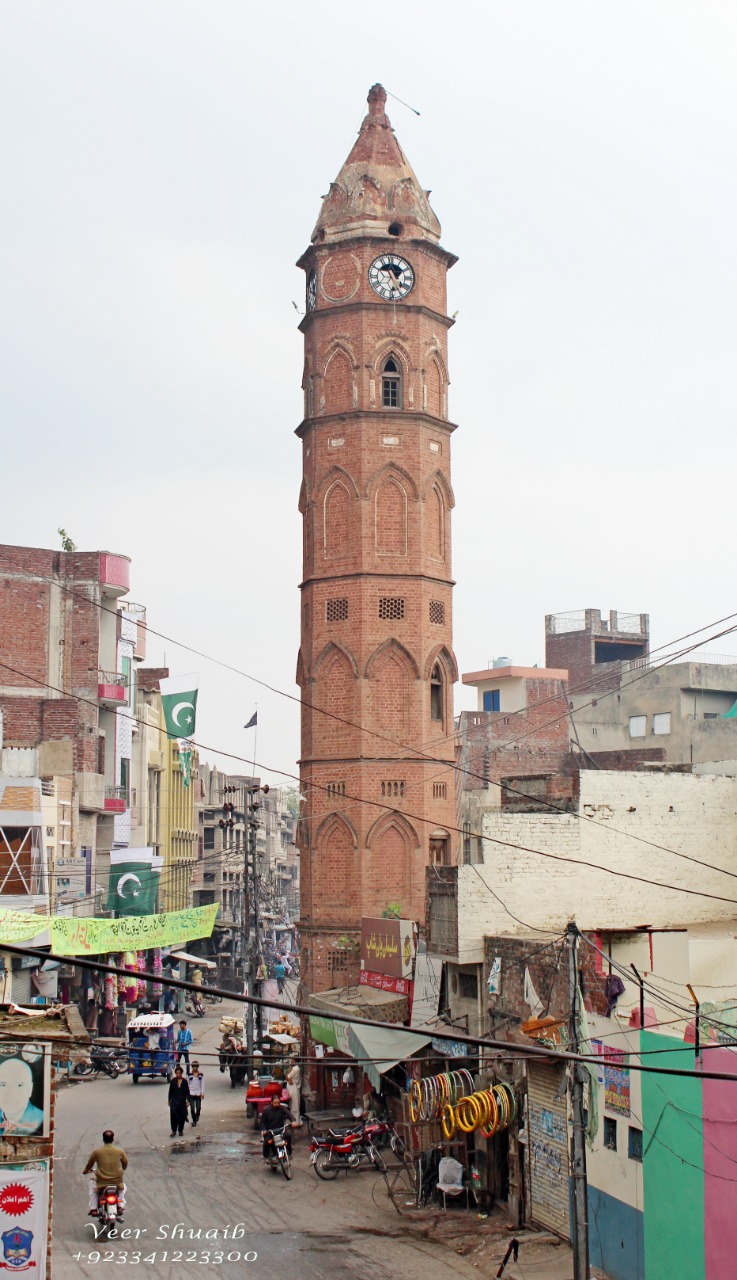
These are photographs of English commemoratives stone and British time grand beautiful and Majestic building of Clock Tower located at Main Bazar Gujaranwala, Punjab, Pakistan. This beautiful clock tower needs restoration and restoration by the concerned authorities. The clock of this tower is out of order.

English Commemorative Stone provides this historical information:


"Gift of B. Gulab Singh V. P. Muncipal Comittee and Manager KH. H. School."


Courtesy by Prof. Veer Shuaib Raza Ji


Sources:


1- English commemoratives stone


Saturday, 30 May 2020

Islamia School Maghiana Jhang


These are photographs of English commemoratives stone and British times grand beautiful building of Islamia School Maghiana Jhang, Punjab, Pakistan. English commemorative stone provides this historical information about Islamia School Maghiana:

"Islamia School Maghiana

حسبنااللہ و نعم الوکیل

This stone was laid by Q. Q. Henriques, Esquire, Deputy Commissioner Jhang 19th March 1912."


Courtesy by Veer Shuaib Raza Ji


Sources:

1- Commemorative stone


Saturday, 23 May 2020

Englishmen Cemetery Fort Munro, Punjab, Pakistan


These are photographs of a small walled Englishmen Cemetery located at the Hill Station of Fort Munro District Dera Ghazi Khan, Punjab, Pakistan. These graves are of Maud Evelyn, James Frederick, Rev. N. H. Smith and Allevean Smith. There are only five graves of English men and women in this small Graveyard of Fort Munro. These five graves are well preserved in iron grid by the local authority. When the British people started government here in United Sub-continent, they settled here. When any British officer died, he was buried here in Sub-continent as it took 6 to 8 months to reach Great Britain from India. Only the deadbodies of very highly ranked British Officers were transferred to England after proper medical care and treatment. Gora Graveyards are found throughout Sub-continent. It is written on the headstones of the Graves of British Officers:

1- " Revd. N. R. Smith of Grahamstown South Africa who sank when bathing at Fort Munro August 2nd 1900. Aged 30."

2- " James Frederick The infant son of Captain and Mrs: J. W. C. Hutchinson; VIth P. I. Born 23rd September 1897. Died 26th April 1898. Thy will be sonp"

3- " In loving Memory of Maud Evelyn wife of Captain M. Li. Ferrar, Indian Army Punjab Commission. Only daughter of W. B. Oldham ESQr I. C. S. C. I. E. Who died at Khar on the 13th October 1906. Aged 26 years."


Courtesy by Mr. Muhammad Azeem Shah Bukhari Sahib


Sources:

1-Headstones of the Graves.


Wednesday, 20 May 2020

Dak Chowki Wazirabad, Punjab, Pakistan


All these photographs are of bilingual Commemorative board and building of Sher Shah Suri's time Dak Chowki(Mail Station) located at Wazirabad, Punjab, Pakistan. English writing of bilingual Commemorative board erected by the office of the Assistant Commissioner Wazirabad provides this historical information about Mail Station Wazirabad:

"Mail Station (Dak Chowki)

Mail Station or Dak Chowki is a relic from Sher Shah Suri era. It is located by the side of Grand Trunk Road and on the south bank of Palkhu Nullah, Just opposite Wazirabad Railway Junction. By means of Dak Chowki, Sher Shah Suri used to gather information about the developments in the state. Normally Dak Chowkis were an Extension of Serais but there is no trace of any Serai here and this Dak Chowki seems to be a standalone structure. This site has been declared as special premises under the Punjab Special Premises(Preservation) Ordinance 1982. As per this law, causing destruction of this structure or changing its original position is an offence and it includes punishment of imprisonment which may extend to one year.


Courtesy by Mr. Imran Ihsan Sahib


Sources:

1- Commemorative board erected by Office of Assistant Commissioner, Wazirabad

Sunday, 10 May 2020

Raees Khana, Attock, Punjab, Pakistan


These are photographs of English commemoratives stone and 113 year old British times beautiful building located near Asfandyar Park Railway station Campbellpur (Attock), Punjab, Pakistan. Publicly it is famous as Raees Khana. The grand beautiful building was erected by Public subscription in memory of Her Majesty Queen Victoria Empress of India in 1907. It is a unique architectural jewel of British Era and needs to be restored by the related departments.


Courtesy by M. Arsalan Naeem Sahib


Sources:

1-Commemorative stone


Wednesday, 22 April 2020

Rasmancha Bishnupur, West Bengal, India


These are photographs of English commemorative board and ancient pyramidal Rasmancha temple located at Bishnupur, West Bengal, India. It is the only unique pyramidal Structure found in India. English commemoratives board erected by Archeological Survey of India Kolkata circle reads as below:


"Rasmancha

Rasmancha with its unique architectural manifestation was built by Bir Hambir in c. 1600 A. D. The temple stands on a raised square laterite plinth with a pyramidal superstructure. Three successive circumbulatory galleries. The arches of which are decorated with terracotta lotus Motifs, enclose the sanctum of the shrine. During the Malla regime, all the images from the neighboring temples were brought at the time of Ras Festival and displayed in the galleries for the public. Its parallel has not been found elsewhere in India and it may be considered as the pride of Bishnupur for its unique shape."


Photographs gifted by Mr. Inderjeet Singh Sahib


Sources:

1- Commemorative board