Wednesday, 26 April 2017

Rewat Fort Located at Rewat City District Rawalpindi, Punjab, Pakistan


All these Photographs Are of English/Urdu Commemorative Board, Fort Plan Board and Interior and Exterior of Hundreds of years Old Rewat Fort Located at Rewat City District Rawalpindi, Punjab, Pakistan.
It is written on The commemorative board of Rewat Fort:

' Government of Pakistan
Department of Archaeology & Museums Islamabad
Rewat Fort
Rewat, a Corruption of an Arabic word "Rebat Meaning Sarai seems originally to be an ancient Sarai." This small fortress Sarai appears to have been built during The Sultanate period in early 15 th century A.D. This elegant little stone fortress is however also curiously associated with The name of Masud son of famous Mahmud of Ghazna (1039 A.D). Where is said to have been  to have been arrested by his rebellious soldiers and eventually murdered in The fort of Giri near Taxila; and subsequently with The name of famous Ghakhar chief Sarang Khan who fell with his sixteen sons fighting against Sher shah Suri and buried within precinct of this monument. This fort contains two gateways on North and East, a three domed mosque in The middle of The Western wing, an octagonal single domed mausoleum on The north Western corner , partly obstructing the frontage of The mosque and numerous scattered graves inside. There Are regular rows of identical living cells along the Four sides of quadrangle inner face of The defence walls overlooking The inner courtyard.'

Photography by Syed Muzamil Hussain ji.


Saturday, 22 April 2017

Serai Dharam Arth Chunian

Serai Dharam Arth Chunian
Built by Dhanpat Ray S/o. Lala Shib Dial Mal Mahllhotra Chunian
Built in 13th April 1921 now Sabzi Mondi - Today's Research


Serai Dharam Arth Located At Railway Road Near Railway Station Kasur, Punjab, Pakistan

' Kasur Special '
These Are The Pictures Of Commemorative Stone And One Hundred Years Old Double Storey Building Of Serai Dharam Arth Located At Railway Road Near Railway Station Kasur, Punjab, Pakistan. This Serai With Six Shops Was Built By Lala Ghaki Shah S/O Sodagar Mal And Lala Radha Kishen S/O Lala Ghaki Shah Of Kasur On 27Th January 1916 A.D And Dedicated For Public Use.
After The Partition Of Sub-Continent, The Serai Dharam Arth Railway Road Kasur Served As Boys Hostel Of Government Boys Islamia Degree College Kasur. I Myself Have Watched This Beautiful Splendid Building Whenever I Happened To Pass Railway Road From My Childhood. Its Upper Storey Is Demolished Now As It Was Declared As 'Dangerous Building' By The Government. It Is Said By The Senior Students That It Is Declared As Dangerous Building Due To Student's Negative Activities. Otherwise Then, Its Condition Was Not Too Bad To Declare As Dangerous Building. Once This Building Was Pearl Of Railway Road Kasur And Looked Very Splendid.
My Dear Father Ashiq Hussain Spent His Graduation Days In This Hostel In Early Sixties.
New Pictures Taken By Sir Veer Shuaib Raza Ji & Other File Photos


Salar Jung Museum

These Are Some Pictures Of Inauguration Stone And Exterior Pictures Of Salar Jung Museum Located At Darushifa, On The Southern Bank Of The Musi River In The City Of Hyderabad, Telangana, India. It Is one Of The National Museums Of India. The Salar Jung Museum Hyderabad Was Inaugurated By Dr. Zakir Hussain, The Then President Of India On 24 Th July 1968 A.D.
The Salar Jung Museum Is Basically An Art Museum Having Good Collections Of Sculptures, Paintings, Carvings, Textiles, Manuscripts, Ceramics, Metallic Artefacts, Carpets, Clocks and Furniture From Japan, China, Burma, Nepal, India, Persia, Egypt, Europe, and North America. The Collection Of The Museum Sourced From The Property Of The Salar Jung Family. It Have 38 Different Galleries ( 20 Galleries On Ground Floor And 18 On First Floor ). Nawab Mir Yousaf Ali Khan Salar Jung III (1889–1949), The Former Prime Minister Of The Seventh Nizam Of Hyderabad Spent A Large Amount Over Thirty Five Years to Make This Priceless Collection.
This Museum Houses The Largest One-Man Collection Of Antiques And Collections Dating Back To The 1st Century A.D In The World. Firstly, These Collections Were Exhibited At 'Diwan Deodi' As A Private Museum Which Was Opened By Jawaharlal Nehru in 1951 And Shifted At Present Building In 1968. The Museum Is Administered By A Board Of Trustees.


Royal Kitchen Located Inside Royal Fort Lahore, Punjab, Pakistan

These Are Pictures Of Commemorative Board Erected By UNSECO-NORWAY And Government Of Punjab And Royal Kitchen Located Inside Royal Fort Lahore, Punjab, Pakistan.
It Is Written On The Commemorative Board Of Royal Kitchen.
' The Complex Of Royal Or Imperial Kitchen Was One Of The Core Functionary Buildings In The Daily Life Of Crowned Heads During Their Stay At Lahore Fort. These Kitchens Passed Through A Number Of Alternation And Additions In Subsequent Occupations By The Sikh And British Government. Presently This Complex Is Being Conserved And Stabilized With The Generous Assistance From The Norwegian Government Through UNSECO, To The Government Of Punjab.'
Pictures By Syed Faizan Naqvi Ji


Residence of General Avitabile at Wazir Abad Punjab Pakistan .

Residence of General Avitabile at Wazir Abad Punjab Pakistan .
The Avitabile Italian General of Khalsa Army of Sher e Punjab Maharaja Ranjeet singh at Punjab


Rani ki vav

Rani ki vav. A step well built in 1067 ad in gujarat. India. Great architecture


Rambagh gate

Entery gate named as Rambagh gate of rambagh built by maharaja ranjit singh in amritsar.


Sunday, 16 April 2017

Victoria Cross Recipient


These Are The Pictures of Commemorative Stone And File Picture of Naik Shamshad Khan, Victoria Cross Recipient of British India. This Commemorative Stone Is Erected at National Memorial Arboretum, Staffordshire, England.
Shahmed Khan (1 July 1879 – 28 July 1947) was an Indian recipient of the Victoria Cross, the highest and most prestigious award for gallantry and Valour in the face of the enemy that can be awarded to British and Commonwealth forces. A Punjabi Muslim Rajput from District Rawalpindi in modern Pakistan, he was 36 years old, and a Naik in the 89th Punjabis, British Indian Army (now 1st Battalion the Baloch Regiment, Pakistan Army) during the First World War. He served on the Tigris Front in Mesopotamia, when the following deed took place, for which he was awarded the VC:

"Shahamad Khan was in charge of a machine-gun section 150 yards from the enemy's position, covering a gap in the New Line at Beit Ayeesa, Mesopotamia on 12th/13 April 1916. After all his men, apart from two belt-fillers, had become casualties, Shamahad Khan, working the gun single-handed, repelled three counter-attacks. Under extremely heavy fire, he continued to hold the gap, whilst it was being made secure, for three hours. When his gun was disabled by enemy fire, he and the two belt-fillers continued to hold the ground with their rifles until they were ordered to retire. Along with the three men who were sent to his assistance, he brought back to his own lines, his gun, ammunition and a severely wounded man. Eventually he returned to remove all remaining arms and equipment, except for two shovels. But for his action, the line would undoubtedly have been penetrated by the enemy."
He later achieved the rank of Subedar. He is buried in his ancestral village of Takhti, Pakistan.


Pictures By Dr. Irfan Malik Ji


Wednesday, 12 April 2017

Preparation House at Kirshan Nagar area Lahore


This is The picture of Commemorative Stone of a Preparation House Located at Kirshan Nagar Area Lahore, Punjab, Pakistan.
It Is written on Commemorative Stone in English and Urdu:
' Om
Khem Kaur Niwas
Makan Tameer Karda Wa Mamlooka Khem Kaur Dharam Patni Lala Nihal Chand Malhotra Amritsar Niwasi, Feb 1942'
Photo By Faizan Naqvi Ji

Sunday, 9 April 2017

Victoria Cross Receipt


' Very Special Post '


These Are Photographs of White And Blue Commemorative Stones And File Photo of Subedar Mir Dast, The Victoria Cross Recipients From Tirah Valley Pakistan.
White Marble Stone is Erected At National Memorial Arboretum, Staffordshire, United Kingdom And Reads As:
' Jemadar Mir Dast 55Th Coke's Rifles (FRONTIER FORCE) 26 April 1915.'
Blue Plaque is Erected at India Gate, Royal Pavilion, Brighton, United Kingdom And Reads As:
' City of Brighton & Hove
Subedar MIR DAST
1874-1945
V. C. I. O. M. O. B. I
55th Coke's Rifles attached to 57th Wilde' Rifles FF
Received the Victoria Cross
From King George V in 1915 at The Royal Pavilion Military Hospital for Bravery at Ypres.'

Mir Dast (3 December 1874 – 19 January 1945) was an Indian recipient of the Victoria Cross, the highest and most prestigious  British Military award for gallantry and valour.
Mir Dast, Afridi, was born in Tirah valley and Died at Shagi Landi Kyan Village, Peshawar and was  buried at Warsak Road Cemetery, Shagi Landi Kyan, Federally Administered Tribal Areas, Pakistan. He joined the British Indian Army in December 1894 and retired from active service in 1917 with the rank of subedar.

On 26 April 1915 at Ypres, Belgium, Jemadar Mir Dast led his platoon with great bravery during the attack, and afterwards collected various parties of the regiment (when no British officers were left) and kept them under his command until the retirement was ordered. He also displayed great courage that day when he risked his life to carry eight wounded British and Indian officers to safety while exposed to very heavy fire.

Photographs By Dr. Irfan Malik Ji


Thursday, 6 April 2017

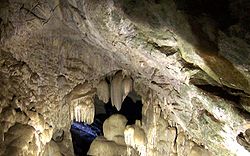
Naturally Formed Borra Caves Located in District Visakhapatnam, Andhra Pradesh ,India.


' Geographic Special '


These Are some pictures of commemorative board and Millions of years old Naturally Formed Borra Caves Located in District Visakhapatnam, Andhra Pradesh ,India. William King the British geologist discovered in 1807 naturally fromed & believed to be 150 million years Old.


The Borra Caves are located on the East Coast of India, in the Ananthagiri hills of the Araku Valley The caves, one of the largest in India, at an elevation of about 705 m (2,313 ft). The caves are basically karstic limestone structures extending to a depth of 80 m (260 ft), and are considered the deepest caves in India.

It is written on English Commemorative board of Borra Caves,
'Borra Caves
William King the British geologist discovered on the 1807 naturally fromed & believed to be 150 million years Old.
Borra Caves Are located about 90 kms North of Visakhapatnam in The Ananthagiri hill ranges of eastern that's, which range between 800 to 1300 mtsM.S.L in The Andhra Pradesh. William King, the British geologist discovered the Caves in 1807. Borra (Hole in Oriya) caves Are naturally fromed and believed to be 150 million years Old. The humic acid in The water reacts with The calcium carbonate in The limestone and dissolved the minerals breaking the rock gradually. The perennial water flow over a period of time results in The formation of caves. Small streams from hillock going towards Gosthani river (Gov-Cow, Sthani-Udder) carved out the caves. The water percolating from The roof containing calcium bi carbonate and other minerals from The mounds on The ground called"Stalagmites" and spear like structure hanging from The roof called "Stalactites". The Stalactites and Stalagmites acquire different shapes inspiring the imagination of The tourists and locals and earing in eresting names and characters like Shiv-Parvathi, Mother-Child, Rushis-Beard, Human brain, crocodile, Tiger , Cows Udder etc.  The formation of brain-shaped stalagmites at central point of Borra Caves can be said as the gift nature

The main entrance of Borra caves is at an altitude of 705 meters MLS while The interior goes down 625 meters MLS. The total length of Borra caves is about 200 meters, but the distance you trek in The caves is about 350 meters. The DBK (Dandakaranya-Bolangir, Kibur) train track is laid over The caves. The Gosthani river that takes care of The thirstiness of The vizagities takes birth at Borra caves areas. Breath taking hilly terrain, beautiful land scape, Semi-evergreen moist deciduous forest and wild fauna of The area are a visual feast. The hill track are inhabited by The tribals, Jatapu, Porja, Kondadora, Nookadora,valmiki etc.
Anthropologists of Andhra Pradesh University, who conducted excavations in The cave , found Stone tools of middle Paleolithic culture, dating back to 30,000 to 50,000 years, indicating human habitation. There is natural Siva Linga deep inside The caves and thousands tribals visit the caves during Siva Ratri festival every year. This Cave  isone of its kind in India and is a pleasure for every tourist coming to Visakhapatnam to visit the caves.'

Pictures Gifted by Inderjeet Singh ji.